

How to Migrate a Java Monolith to Microservices
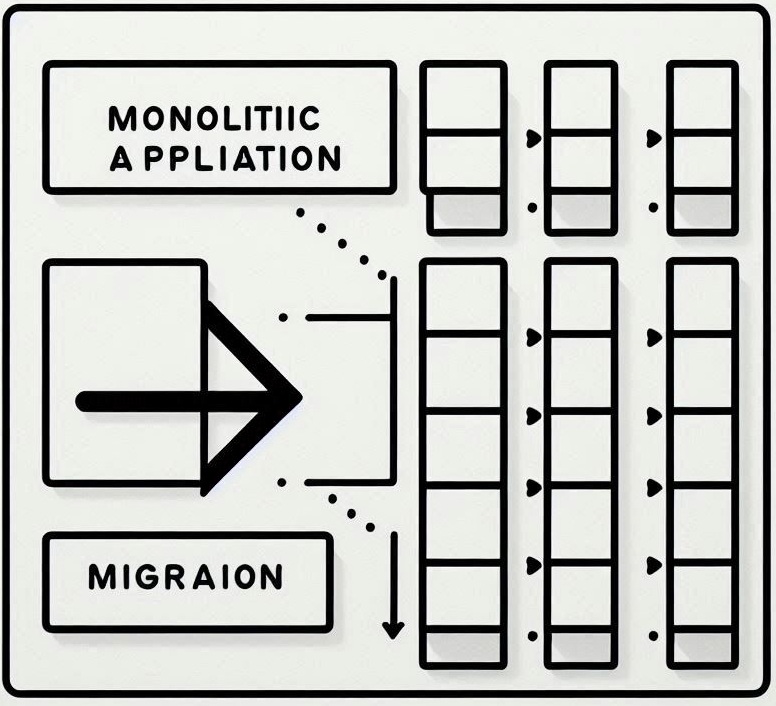
Many enterprises running on Java monoliths eventually face challenges in scalability, agility, and deployment speed. Microservices offer a solution, but migrating is not a one-time rewrite. It’s a careful, step-by-step journey.
1. Understand Why You’re Migrating
Before starting, define the drivers:
- Do you need faster feature delivery?
- Are teams blocked because the codebase is too tightly coupled?
- Is scalability (only some modules need to scale) a concern?
Clear business and technical goals prevent migrating “just for the sake of microservices.”
2. Assess the Monolith
- Map existing modules, APIs, and dependencies.
- Identify bounded contexts (using Domain-Driven Design).
- Find hotspots: large, frequently changing modules are good candidates for extraction.
3. Choose a Migration Strategy
- Strangler Fig Pattern- gradually replace monolith features with microservices while keeping the monolith running.
- Modularization First - break the monolith into internal modules/packages before extracting services.
- Event-Driven Split - introduce messaging (Kafka, RabbitMQ, etc.) to decouple parts of the system.
4. Define Microservice Architecture Standards
- Service boundaries - each service owns its data.
- Communication - REST, gRPC, or messaging.
- Database strategy - database per service (most common) or schema partitioning.
- Cross-cutting concerns - centralized logging, monitoring, authentication.
5. Technology Choices for Java
- Spring Boot + Spring Cloud - service discovery, config server, API gateway, resilience.
- Containerization - Docker & Kubernetes for scaling and orchestration.
- Observability - ELK stack, Grafana, OpenTelemetry.
6. Start Small and Iterate
- Extract 1–2 services first (e.g., User Service or Payment Service).
- Keep integration with the monolith via APIs.
- Build CI/CD pipelines for deployment automation.
- Add automated testing (unit, integration, contract tests).
7. Manage Challenges
- Data consistency - Saga or Outbox patterns.
- Distributed complexity - monitoring and alerting become essential.
- Cultural shift - teams need DevOps mindset and autonomy.
Migrating a Java monolith to microservices is not about rewriting everything overnight. It’s about incremental evolution: starting with clear goals, carving services carefully, and investing in the right infrastructure.
Done right, microservices unlock faster delivery, independent scaling, and modern cloud-native agility — without losing the reliability of your monolith.
Assess your business potentials and find opportunities for bigger success